Stress and Fertility: How Cortisol Affects Your Chances of Conceiving
Learn how chronic stress and elevated cortisol disrupt ovulation through the GnRH pathway. Evidence-based stress management strategies for women trying to conceive.


⚡ Quick Answer
Chronic stress raises cortisol, which suppresses GnRH — the hormone that triggers ovulation. This disrupts your LH and FSH balance, potentially causing irregular cycles or anovulation. The good news? Evidence-based stress management (not "just relaxing") can genuinely improve fertility outcomes.
🔑 Key Takeaways
- Chronic stress directly disrupts the hormonal cascade that controls ovulation through the HPA axis
- Cortisol suppresses GnRH, which then throws off your LH and FSH — the hormones your ovaries need to release an egg
- This isn't about "just relaxing" — it's about measurable biological pathways confirmed in clinical research
- Evidence-based stress reduction (mindfulness, CBT, moderate exercise) has been shown to improve conception rates
- Managing stress while TTC is not optional self-care — it's a fertility strategy backed by science
📑 Table of Contents
I see it in my clinic every single week. A woman sits across from me, exhausted, anxious, and quietly devastated after months — sometimes years — of trying to conceive. She's tracking her ovulation, taking her supplements, eating well. But the one thing she can't seem to control? Her stress levels. And the cruel irony is that the pressure of trying to get pregnant may itself be making it harder.
If that sounds like you, I want you to know: this is not in your head. There is real, published science showing that stress affects fertility through specific, measurable biological pathways. And more importantly, there are evidence-based things you can do about it — not vague "just relax" advice, but actual strategies with research behind them.
In this article, I'll walk you through exactly how stress impacts your reproductive system, what the clinical research actually says, and what I recommend to my clients when stress is clearly part of the picture.
How Stress Actually Affects Your Fertility
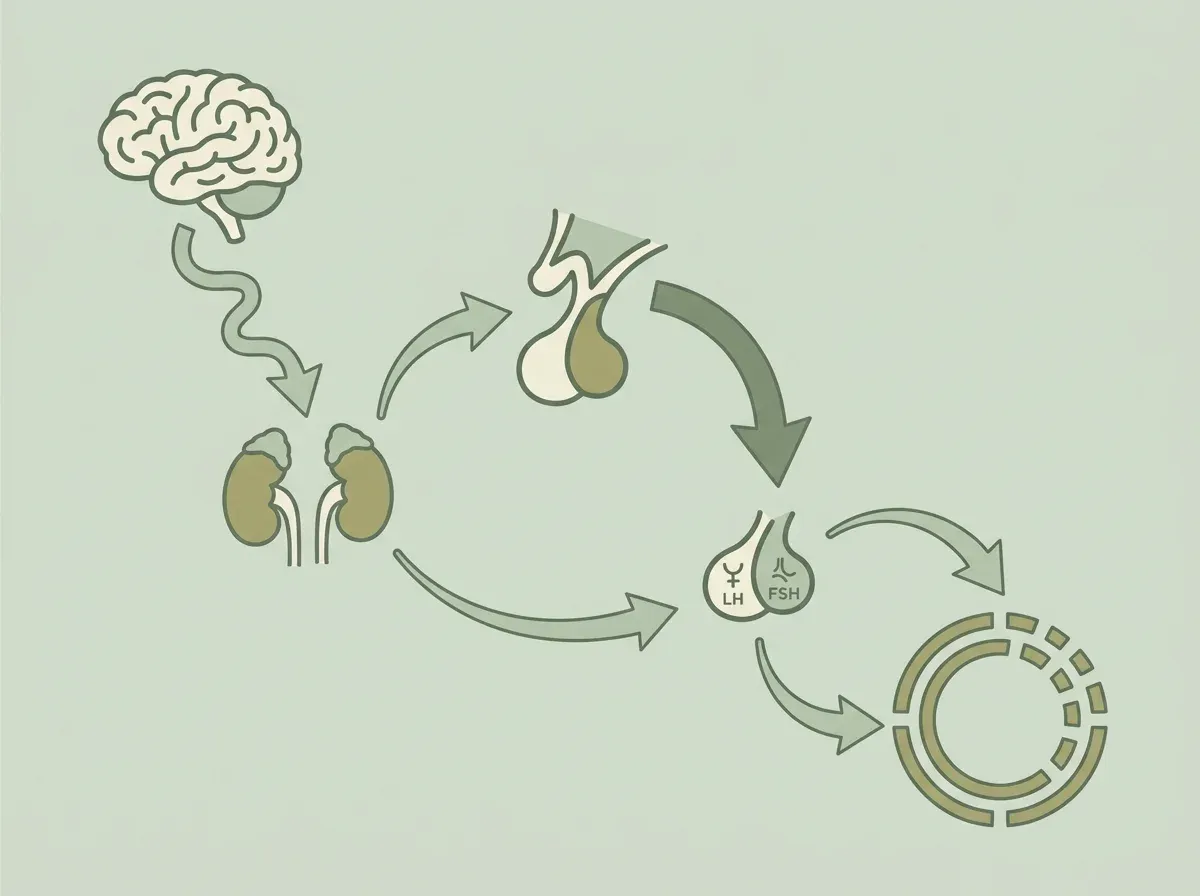
To understand stress and fertility, you need to understand the HPA axis — short for hypothalamic-pituitary-adrenal axis. This is your body's central stress response system, and it has a direct line of communication with your reproductive system through another axis: the HPG (hypothalamic-pituitary-gonadal) axis.
Here's the simplified version. When your brain perceives stress — whether it's a work deadline, a fertility appointment, or chronic worry about conceiving — your hypothalamus signals your adrenal glands to release cortisol. Cortisol is your primary stress hormone, and in short bursts, it's genuinely useful.
The problem starts when stress becomes chronic. A systematic review published in PMC (Serefoglu et al., 2023) found consistent evidence that elevated cortisol levels are associated with infertility in both natural conception and assisted reproduction. The body essentially decides that now isn't a good time to reproduce — and it has the hormonal machinery to act on that decision.
I tell my clients to think of it this way: your body doesn't distinguish between running from a tiger and panicking about a negative pregnancy test. Both trigger the same stress cascade, and both can temporarily shut down the reproductive system.
The Cortisol-GnRH Connection Explained
Let me break down the actual mechanism, because understanding this helps you see why stress management isn't just "nice to have" — it's physiologically necessary.
GnRH (gonadotropin-releasing hormone) is produced by your hypothalamus. It's the master switch that tells your pituitary gland to release LH (luteinising hormone) and FSH (follicle-stimulating hormone). Without adequate GnRH pulsing, your ovaries don't get the signal to develop and release an egg.
When cortisol levels stay elevated, they directly suppress GnRH secretion. Research by Spandidos Publications (2025) demonstrated that psychological stress reduces GnRH pulse frequency and amplitude, leading to disrupted ovulation patterns. The downstream effect: LH surges become irregular, follicle development stalls, and you may experience anovulatory cycles — cycles where no egg is released at all.
This is the biological reality behind "stress can make it harder to get pregnant." It's not folk wisdom. It's endocrinology.
But there's another layer. Elevated cortisol also affects:
- Progesterone production — cortisol is made from the same precursor hormone (pregnenolone), so chronic stress can literally steal the raw materials your body needs for progesterone, the hormone that supports implantation
- Thyroid function — cortisol blunts TSH output, and even mild thyroid disruption can interfere with ovulation
- Insulin sensitivity — stress-driven insulin spikes are particularly relevant for women with PCOS, where insulin already drives hormonal imbalance
- Cervical mucus quality — stress-related dehydration and hormonal shifts can reduce the quality of your fertile mucus
Signs Stress Might Be Affecting Your Cycle
In my experience, many women don't realise stress is affecting their fertility until I walk them through the signs. Here are the patterns I look for:
- Irregular cycle lengths — your cycle varies by more than 7 days month to month
- Missing or delayed ovulation — you're tracking but not seeing a clear LH surge, or it's arriving much later than expected
- Short luteal phase — less than 10 days between ovulation and your period, which doesn't give a fertilised egg enough time to implant
- Heavier or more painful periods than usual — stress can increase prostaglandin production
- Complete absence of periods (amenorrhoea) in extreme cases — your body has fully decided reproduction is off the table
- Worsening PMS symptoms — mood swings, breast tenderness, and bloating intensify when cortisol is high
If you recognise more than two of these patterns and your blood work is coming back normal, I'd encourage you to look seriously at stress as a contributing factor. I've worked with women whose cycles completely normalised once they addressed the stress piece — not by "relaxing," but by making targeted changes to their daily routine.
Can Stress Really Cause Infertility?
This is the question I get most often, and the honest answer is nuanced. Stress alone rarely causes infertility in otherwise healthy women. But it can absolutely be the tipping point — especially when other factors are present (age, PCOS, endometriosis, male factor issues).
A landmark study by Domar et al. (2015) followed women undergoing fertility treatment and found that those who participated in a mind-body stress reduction programme had significantly higher pregnancy rates than the control group. The effect was most pronounced in women who had the highest baseline stress levels.
Klonoff-Cohen et al. (2001) specifically studied stress in women undergoing IVF and found that anxiety levels before treatment were associated with fewer oocytes retrieved and lower pregnancy rates. The relationship between stress and IVF outcomes has been replicated multiple times since.
What I say to my clients is this: stress probably isn't the only reason you're not pregnant. But if it's part of the picture, dealing with it can only help — and the research suggests it can help significantly.
Stress and IVF: What the Research Shows
If you're going through or considering IVF, the stress-fertility connection becomes even more relevant. IVF is inherently stressful — the injections, the monitoring, the waiting, the financial pressure. And the research tells us this stress isn't just unpleasant; it can measurably affect outcomes.
Domar et al. (2015) showed that women who participated in cognitive behavioural therapy (CBT) during IVF had higher pregnancy rates. A meta-analysis by Frederiksen et al. (2015) confirmed that psychological interventions before and during IVF improve live birth rates.
I tell my clients going through IVF: the goal isn't to be calm all the time. That's unrealistic and adds more pressure. The goal is to have tools — specific, practised techniques you can pull out when the anxiety spikes. That's what makes a measurable difference.
Practical things I recommend for IVF patients specifically:
- Start a stress management practice at least 4 weeks before your cycle begins — don't wait until stimulation starts
- Communicate openly with your partner about what you need (and don't need) during the process
- Set boundaries around "helpful" advice from well-meaning family members
- Build in one restorative activity per day that has nothing to do with fertility
- Consider working with a fertility counsellor — not because something is wrong, but because the process is genuinely hard

Evidence-Based Ways to Reduce Stress While TTC
Now for the practical bit. These are the strategies I recommend to my clients — all with published evidence behind them. No woo-woo. Just science-backed approaches that actually work.
1. Mindfulness-Based Stress Reduction (MBSR)
The strongest evidence base of any stress reduction technique for fertility. MBSR programmes typically run 8 weeks and combine meditation, body scanning, and gentle yoga. Multiple studies, including the Domar et al. (2015) trial, show improved fertility outcomes in women who complete MBSR. You don't need a formal programme — even 15 minutes of daily mindfulness meditation makes a difference.
2. Cognitive Behavioural Therapy (CBT)
CBT helps you identify and reframe the thought patterns that drive fertility anxiety. Things like "I'll never get pregnant" or "My body is broken" — these thoughts trigger cortisol release. CBT doesn't make the thoughts disappear, but it changes how your brain responds to them. I've seen this transform women's relationship with the TTC process.
3. Moderate, Consistent Exercise
Notice I said moderate. Intense exercise (HIIT, marathon training) can actually increase cortisol and suppress ovulation. But a 30-minute daily walk, gentle swimming, or yoga has been shown to reduce cortisol and improve cycle regularity. The key is consistency over intensity.
4. Sleep Hygiene
Sleep is when your body regulates cortisol. If you're not getting 7-9 hours of quality sleep, your cortisol stays elevated into the next day. I wrote more about this in my article on <a href='/fertility-and-sleep/'>sleep and fertility</a>, but the basics: consistent bedtime, dark room, no screens an hour before bed.
5. Social Support
Isolation amplifies stress. Women who feel supported by their partner, friends, or a peer group consistently show lower fertility-related anxiety in the research. This might mean joining an online TTC community, seeing a therapist, or simply having one friend you can be honest with.
I also want to mention <a href='/fertility-anxiety/'>fertility anxiety</a> specifically — because the anxiety about getting pregnant often becomes its own separate problem. If you're having intrusive thoughts about infertility, checking forums compulsively, or unable to think about anything else, please consider speaking to a professional who specialises in reproductive mental health.
🌿 Dani Recommends
4-7-8 Breathing Technique
This is the first thing I teach clients who come in stressed. Breathe in for 4 counts, hold for 7, exhale for 8. Do it three times, twice a day. It activates your parasympathetic nervous system — literally switching off the fight-or-flight response. I do this before every clinic session. It takes 60 seconds, costs nothing, and the research on its cortisol-lowering effect is solid. Start today, not next week.
Frequently Asked Questions
Can stress alone stop you from getting pregnant?
Chronic stress can disrupt ovulation by suppressing GnRH through elevated cortisol, which makes conception harder in a given cycle. However, stress alone is rarely the sole cause of infertility. It's more often a contributing factor that tips the balance when other issues are present. The good news: addressing stress has been shown to improve pregnancy rates in clinical trials.
How does cortisol affect ovulation specifically?
Cortisol suppresses the pulsatile release of GnRH from the hypothalamus. Without proper GnRH signalling, the pituitary doesn't release adequate LH and FSH. This disrupts follicle development and can delay or prevent the LH surge needed to trigger ovulation. Over time, chronic cortisol elevation can lead to anovulatory cycles.
How long does it take for stress management to improve fertility?
Most studies showing positive effects use 8-12 week interventions. In my experience, women often notice cycle improvements within 2-3 months of consistent stress reduction. But there's no downside to starting now — stress management benefits every system in your body, not just reproduction.
Can IVF success rates be affected by stress?
Yes. Research by Domar et al. (2015) and Klonoff-Cohen et al. (2001) both found that higher pre-treatment anxiety was associated with lower IVF success rates. Women who engaged in stress reduction programmes before and during IVF had higher pregnancy rates. This doesn't mean stress causes IVF failure, but managing it measurably improves outcomes.
Is it possible to be too stressed to conceive naturally?
In extreme cases, yes. Severe chronic stress can cause hypothalamic amenorrhoea — complete cessation of periods due to suppressed GnRH. This is most common in athletes with high training loads, women with eating disorders, or those experiencing severe psychological stress. But even moderate, ongoing stress can delay ovulation and shorten the luteal phase enough to reduce your chances each cycle.
Should I take time off trying to conceive to reduce stress?
This is deeply personal, and I'd never tell someone to stop trying. But I do encourage my clients to build in "non-fertility" time — periods where you're not tracking, testing, or analysing. Some months, that might mean not using OPKs. The research supports that reducing the psychological pressure of TTC can improve outcomes.
What's the difference between normal TTC stress and something that needs professional help?
Normal TTC stress looks like: feeling disappointed after a negative test, worrying about timelines, occasionally Googling symptoms. It needs professional attention when: you can't stop thinking about fertility, you're avoiding social situations due to baby-related triggers, your relationship is suffering, you're having panic attacks, or you feel hopeless. If any of those resonate, please reach out to a fertility counsellor — organisations like <a href='https://www.bica.net'>BICA</a> and <a href='https://fertilitynetworkuk.org'>Fertility Network UK</a> can help.
⚕️ Medical Disclaimer
This article is for informational purposes only and does not constitute medical advice. Always consult with a qualified healthcare professional before making changes to your fertility plan, starting supplements, or beginning any stress management programme. If you are experiencing severe anxiety or depression related to fertility, please speak to your GP or a specialist mental health professional.
📚 Cite This Page
Dani, Fertilitys. "Stress and Fertility: How Cortisol Affects Your Chances of Conceiving." Fertilitys.com, 5 Jul. 2026, https://fertilitys.com/stress-and-fertility/
References
- Serefoglu, E.C. et al. (2023) 'Infertility and cortisol: A systematic review', PMC, 10344356. Available at: https://pubmed.ncbi.nlm.nih.gov/10344356/
- Domar, A.D. et al. (2015) 'Impact of a group mind/body intervention on pregnancy rates in IVF patients', Fertility and Sterility, 103(1), pp. 226–231.
- Spandidos Publications (2025) 'Psychological stress and ovarian function: impact on GnRH pulsatility', Molecular Medicine Reports.
- Klonoff-Cohen, H. et al. (2001) 'A prospective study of stress among women undergoing in vitro fertilization', Fertility and Sterility, 76(4), pp. 675–687.
- Frederiksen, Y. et al. (2015) 'Psychosocial interventions for couples during fertility treatment: systematic review', Human Reproduction Update, 21(4), pp. 526–544.
- Cousineau, T.M. and Domar, A.D. (2007) 'Psychological impact of infertility', Best Practice & Research Clinical Obstetrics & Gynaecology, 21(2), pp. 293–308.
Written by

Subscribe to Fertilitys
All my Free Resources. No spam. Unsubscribe anytime.